
Black History Month Reading Recommendations
Tyler Hill, Library Research Assistant | tyler.hill@usu.edu
Check out USU Libraries' curated list of must-reads for Black History Month!

Gathering of Waters by Bernice L. McFadden
Libby Book of the Month!
Gathering of Waters by Bernice L. McFadden is this month's featured e-book, available to everyone with no holds or wait times through the Libby app.
Tass Hilson and Emmett Till were young and in love when Emmett was brutally murdered in 1955. Anxious to escape the town, Tass marries Maximillian May and relocates to Detroit.
Forty years later, after the death of her husband, Tass returns to Money and fantasy takes flesh when Emmett Till's spirit is finally released from the dank, dark waters of the Tallahatchie River. The two lovers are reunited, bringing the story to an enchanting and profound conclusion.
Gathering of Waters mines the truth about Money, Mississippi, as well as the town's families, and threads their history over decades. The bare-bones realism—both disturbing and riveting—combined with a magical realm in which ghosts have the final say, is reminiscent of Toni Morrison's Beloved.
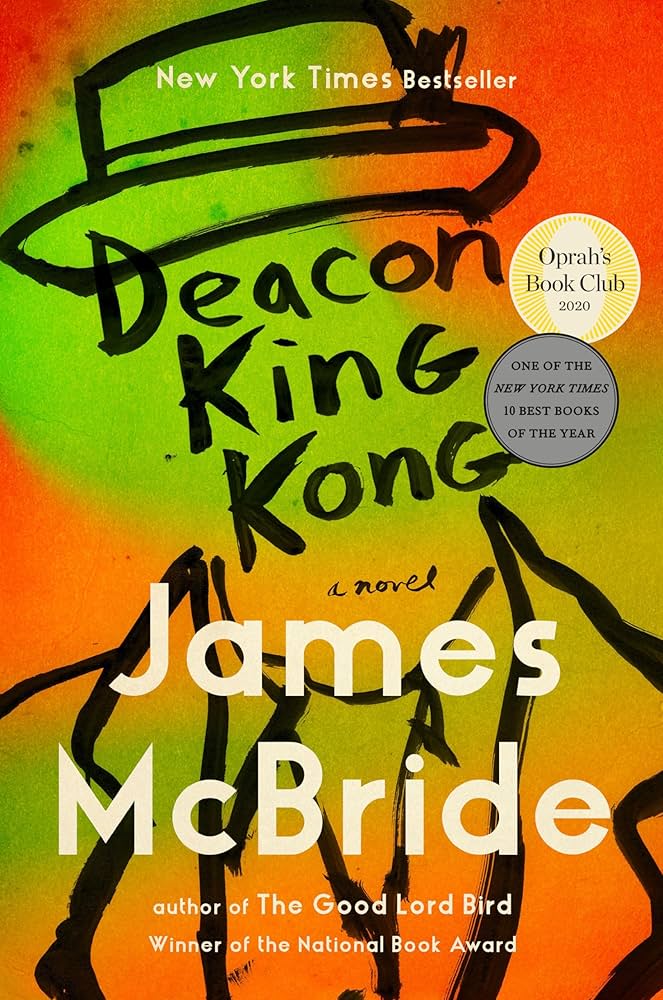
Deacon King Kong by James McBride
In September 1969, a fumbling, cranky old church deacon known in the neighborhood as Sportcoat shuffles into the courtyard of the Causeway Housing project in south Brooklyn, pulls a .38 from his pocket, and in front of everybody shoots the project's drug dealer at point-blank range.
The reasons for this desperate burst of violence and the consequences that spring from it lie at the heart of Deacon King Kong, James McBride's novel and his first since his National Book Award-winning The Good Lord Bird. McBride brings to vivid life the people affected by the shooting: the victim, the African-American and Latinx residents who witnessed it, the white neighbors, the local NYPD cops assigned to investigate what happened, the members of the Five Ends Baptist Church where Sportcoat was deacon, the neighborhood's Italian mobsters, and Sportcoat himself.
As the story deepens, it becomes clear that the lives of the characters—caught in the tumultuous swirl of New York in the late 1960s—overlap in unexpected ways. When the truth finally emerges, McBride shows us that not all secrets can be hidden, that the best way to grow is to face change without fear, and that the seeds of love lie in compassion and hope.

Mumbo Jumbo by Ishmael Reed
It is the 1920s in New York City and an epidemic known as Jes Grew is sweeping the nation—a dancing plague, irresistible, joyful, and undeniably Black. Naturally, the powers-that-be are having none of it. A repressive conspiracy is operating in the shadows, and it is dead set on squelching Jes Grew and its Carriers—Black artists and musicians—by any means necessary.
So begins the classic novel by Ishmael Reed, the iconic satirist whose contributions to American literature have drawn praise from the likes of James Baldwin and Harold Bloom. Mumbo Jumbo is an ingenious deconstruction of Western civilization—a cinematic collage that mixes portraits of historical figures and incidents with sound bites on subjects ranging from ragtime to Greek philosophy. Now with a new introduction by the author, this timeless and crucial work of twentieth-century fiction is ready to be discovered by a new generation of readers.
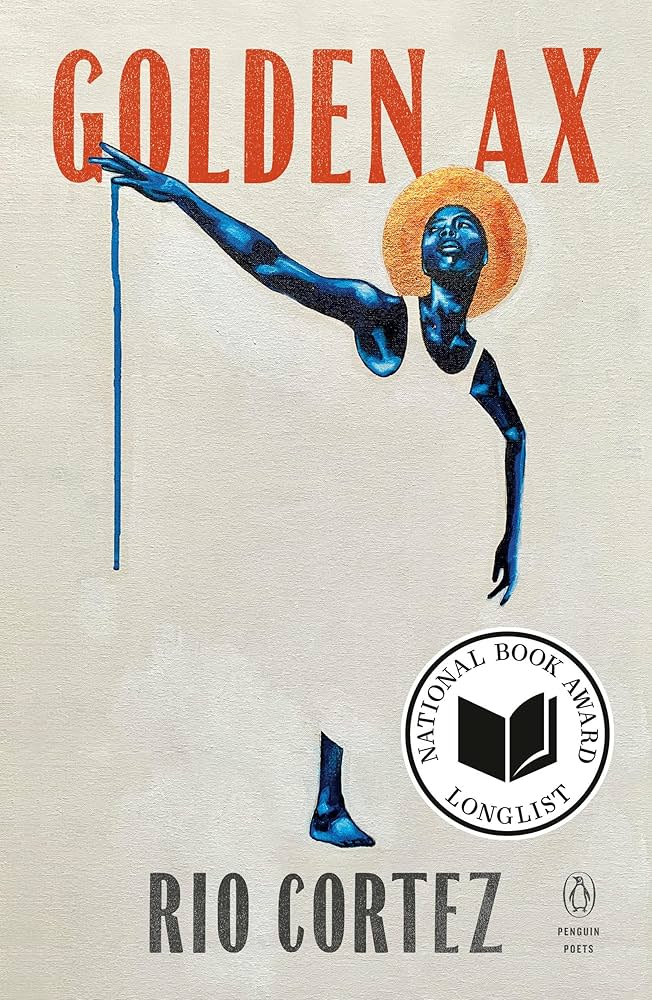
Golden Ax by Rio Cortez
From a visionary writer praised for her captivating work on Black history and experience comes a poetry collection exploring personal, political, and artistic frontiers, journeying from her family's history as "Afropioneers" in the American West to shimmering glimpses of transcendent, liberated futures.
In poems that range from wry, tongue-in-cheek observations about contemporary life to more nuanced meditations on her ancestors—some of the earliest Black pioneers to settle in the western United States after Reconstruction—Golden Ax invites readers to re-imagine the West, Black womanhood, and the legacies that shape and sustain the pursuit of freedom.

Black Punk Now by Chris L. Terry and James Spooner
Black Punk Now is an anthology of contemporary nonfiction, fiction, illustrations, and comics that collectively describe punk today and give punks—especially the Black ones—a wider frame of reference. It shows all of the strains, styles, and identities of Black punk that are thriving, and gives newcomers to the scene more chances to see themselves.
Curated from the perspective of Black writers with connections to the world of punk, the collection mixes media as well as generations, creating a new reference point for music-lovers, readers, and historians by capturing the present and looking towards the future. With strong visual elements integrated throughout, this smart, intimate collection is demonstrative of punk by being punk itself: underground, rebellious, aesthetic but not static—working to decenter whiteness by prioritizing other perspectives.
Edited by graphic novelist and filmmaker James Spooner, and author Chris L. Terry, contributors to the collection include critic Hanif Abdurraqib and Mars Dixon, conversations with Brontez Purnell, and a roundtable of all femme festival organizers.

Speculative Light: The Arts of Beauford Delaney and James Baldwin by Amy J. Elias
Over the course of a thirty-eight-year friendship, painter Beauford Delaney and writer James Baldwin shared their private lives and shaped one another's artistic values. Speculative Light brings to together scholars, critics, and artists who analyze the stylistic and historical import of Delaney's and Baldwin's works and examine how this friendship fundamentally shaped the pair's ideas about art and life. The book's contributors explore how the two men, sharing identities as queer Black American artists, first in New York and then as expatriates in France, created a speculative space in their work to think about more just and creative Black futures. Essay topics and issues range from masculinity, queerness, Blackness, and Americanness to the relationship between jazz, painting, and writing. Throughout, the contributors establish a positive history for Delaney's and Baldwin's arts that refuses a subordinate role to white artists of the modernist avant-garde. Ultimately, Speculative Light demonstrates that Delaney and Baldwin's bond provides revolutionary grounds for theorizing contemporary Black art and life.

The Conjuring of America by Lindsey Stewart
The Conjuring of America tells the epic story of conjure women, who, through a mix of spiritual beliefs, herbal rituals, and therapeutic remedies gave rise to the rich tapestry of American culture we see today. Feminist philosopher Lindsey Stewart tells the stories of Negro Mammies of slavery; the Voodoo Queens and Blues Women of Reconstruction; and the Granny Midwives and textile weavers of the Jim Crow era. These women, in secrecy and subterfuge, courageously and devotedly continued their practices and worship for centuries and passed down their traditions.
Emerging first in the American South during slavery, these women were thrust into the heart of national conflicts over generations of African American life. They combined ancestral magic and hyperlocal resources to respond to Black struggles in real time, forging a secret well of health and power hidden to their oppressors. As a result, conjure informs our lives in ways remarkable and ordinary—from traditional medicines that informed the creation of Vicks VapoRub and the rise of Aunt Jemima's Pancake Mix, to the original magic of Disney's The Little Mermaid (2023), and the true origins of the all-American classic blue jean.
From the moment enslaved Africans first arrived on these shores, conjure was heavily regulated and even outlawed. Now, Stewart uncovers new contours of American history, sourcing letters from the enslaved, dispatches from the lore of Oshun and other African mystics. The Conjuring of America is a love letter to the real magic Black women used: their herbs, food, textiles, song, and dance, used to sow rebellion, freedom, and hope.

James by Percival Everett
When Jim overhears that he is about to be sold to a man in New Orleans, separated from his wife and daughter forever, he runs away until he can formulate a plan. Meanwhile, Huck has faked his own death to escape his violent father. As all readers of American literature know, thus begins the dangerous and transcendent journey by raft down the Mississippi River toward the elusive and unreliable promise of the Free States and beyond.
Brimming with electrifying humor and lacerating observations that have made Everett a literary icon, this brilliant and tender novel radically illuminates Jim's agency, intelligence, and compassion as never before. James is destined to be a major publishing event and a cornerstone of twenty-first century American literature.

Hip-Hop Is History by Questlove and Ben Greenman
This is a book only Questlove could have written: a perceptive and personal reflection on the first half-century of hip-hop.
When hip-hop first emerged in the 1970s, it wasn't expected to become the cultural force it is today. But for a young Black kid growing up in a musical family in Philadelphia, it was everything. He stayed up late to hear the newest songs on the radio. He saved his money to buy vinyl as soon as it landed. He even started to try to make his own songs. That kid was Questlove, and decades later, he is a six-time Grammy Award–winning musician, an Academy Award–winning filmmaker, a New York Times bestselling author, a producer, an entrepreneur, a cofounder of one of hip-hop's defining acts (the Roots), and the genre's unofficial in-house historian.
In this landmark book, Hip-Hop Is History, Questlove skillfully traces the creative and cultural forces that made and shaped hip-hop, highlighting both the forgotten but influential gems and the undeniable chart-topping hits—and weaves it all together with the stories no one else knows. It is at once an intimate, sharply observed story of a cultural revolution and a sweeping, grand theory of the evolution of the great artistic movement of our time. And Questlove, of course, approaches it with not only the encyclopedic fluency and passion of an obsessive fan but also the expertise and originality of an innovative participant.
Hip-hop is history, and also his history.

The Nickel Boys by Colson Whitehead
When Elwood Curtis, a black boy growing up in 1960s Tallahassee, is unfairly sentenced to a juvenile reformatory called the Nickel Academy, he finds himself trapped in a grotesque chamber of horrors. Elwood's only salvation is his friendship with fellow "delinquent" Turner, which deepens despite Turner's conviction that Elwood is hopelessly naive, that the world is crooked, and that the only way to survive is to scheme and avoid trouble. As life at the Academy becomes ever more perilous, the tension between Elwood's ideals and Turner's skepticism leads to a decision whose repercussions will echo down the decades.
Based on the real story of a reform school that operated for 111 years and warped the lives of thousands of children, The Nickel Boys is a devastating, driven narrative that showcases a great American novelist writing at the height of his powers.

The Heaven & Earth Grocery Store by James McBride
In 1972, when workers in Pottstown, Pennsylvania, were digging the foundations for a new development, the last thing they expected to find was a skeleton at the bottom of a well. Who the skeleton was and how it got there were two of the long-held secrets kept by the residents of Chicken Hill, the dilapidated neighborhood where immigrant Jews and African Americans lived side by side and shared ambitions and sorrows. Chicken Hill was where Moshe and Chona Ludlow lived when Moshe integrated his theater and where Chona ran the Heaven & Earth Grocery Store. When the state came looking for a deaf boy to institutionalize him, it was Chona and Nate Timblin, the Black janitor at Moshe's theater and the unofficial leader of the Black community on Chicken Hill, who worked together to keep the boy safe.
As these characters' stories overlap and deepen, it becomes clear how much the people who live on the margins of white, Christian America struggle and what they must do to survive. When the truth is finally revealed about what happened on Chicken Hill and the part the town's white establishment played in it, McBride shows us that even in dark times, it is love and community—heaven and earth—that sustain us.
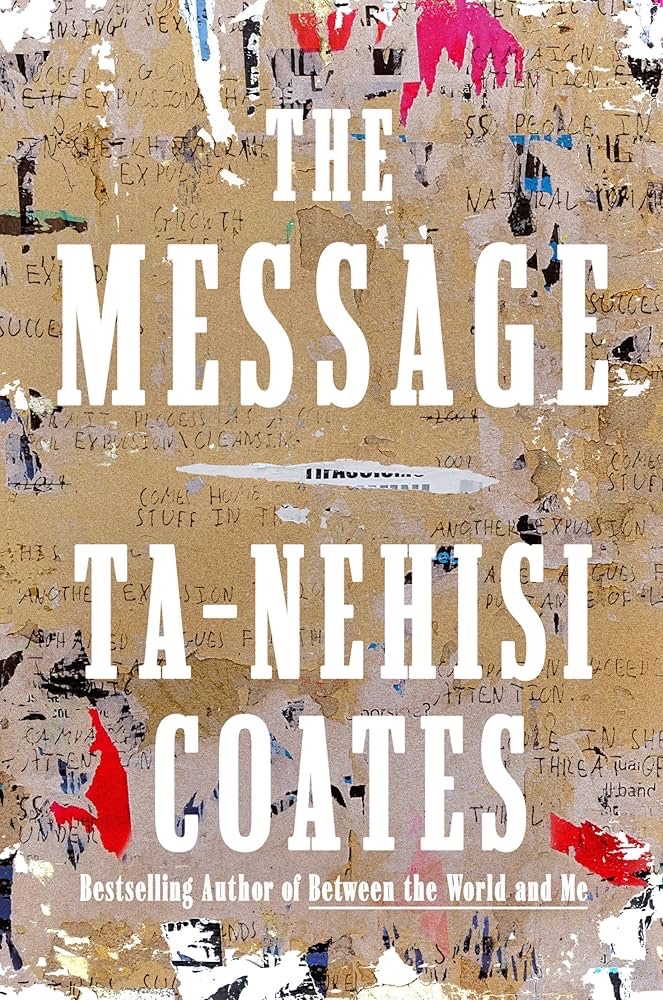
The Message by Ta-Nehisi Coates
Ta-Nehisi Coates originally set out to write a book about writing, in the tradition of Orwell's classic "Politics and the English Language," but found himself grappling with deeper questions about how our stories—our reporting and imaginative narratives and mythmaking—expose and distort our realities.
In the first of the book's three intertwining essays, Coates, on his first trip to Africa, finds himself in two places at once: in Dakar, a modern city in Senegal, and in a mythic kingdom in his mind. Then he takes readers along with him to Columbia, South Carolina, where he reports on his own book's banning, but also explores the larger backlash to the nation's recent reckoning with history and the deeply rooted American mythology so visible in that city—a capital of the Confederacy with statues of segregationists looming over its public squares. Finally, in the book's longest section, Coates travels to Palestine, where he sees with devastating clarity how easily we are misled by nationalist narratives, and the tragedy that lies in the clash between the stories we tell and the reality of life on the ground.
Written at a dramatic moment in American and global life, this work from one of the country's most important writers is about the urgent need to untangle ourselves from the destructive myths that shape our world—and our own souls—and embrace the liberating power of even the most difficult truths.