
Native American Heritage Month
November 2025
Author/Contact: Tyler Hill, Library Research Assistant | tyler.hill@usu.edu

November is Native American Heritage Month! Explore featured digital collections and a curated list of reading recommendations that celebrate the history, resilience, and living cultures of Native Americans.
Digital Collection: Northwestern Band of the Shoshone Nation
The Northwestern Band of Shoshone Nation Tribal Library Digital Collection is the product of a twenty-year effort to collect and digitize materials found in archives across the state. Much of the collection is physically housed at the tribal offices, but through a collaboration between the Northwestern Band of the Shoshone Nation, USU’s Merrill-Cazier Library, and the Church of Jesus Christ of Latter-day Saints Church History Library, thousands of materials have been made digitally accessible to the tribe and its members and to those interested in their history.
Utah State University has partnered with the Northwestern Band of the Shoshone to create this digital collection so that Shoshone community members will have greater access to the history of the tribe, its family connections, its language, and its customs, ensuring that the contemporary historical record includes a Shoshone voice.
Intermountain Indian School
In 1948, Bushnell Hospital in Brigham City, Utah, was transformed into what would become the Intermountain Indian School, known as the “world’s largest boarding school.” The school opened its doors in January 1950 to five hundred Navajo students. Educational goals included teaching English, academic disciplines, and vocational skills intended to promote assimilation into mainstream America.
This collection provides access to a wide range of rare materials such as student publications, classroom resources, publicity photos, and congressional correspondence documenting the school’s complex legacy.
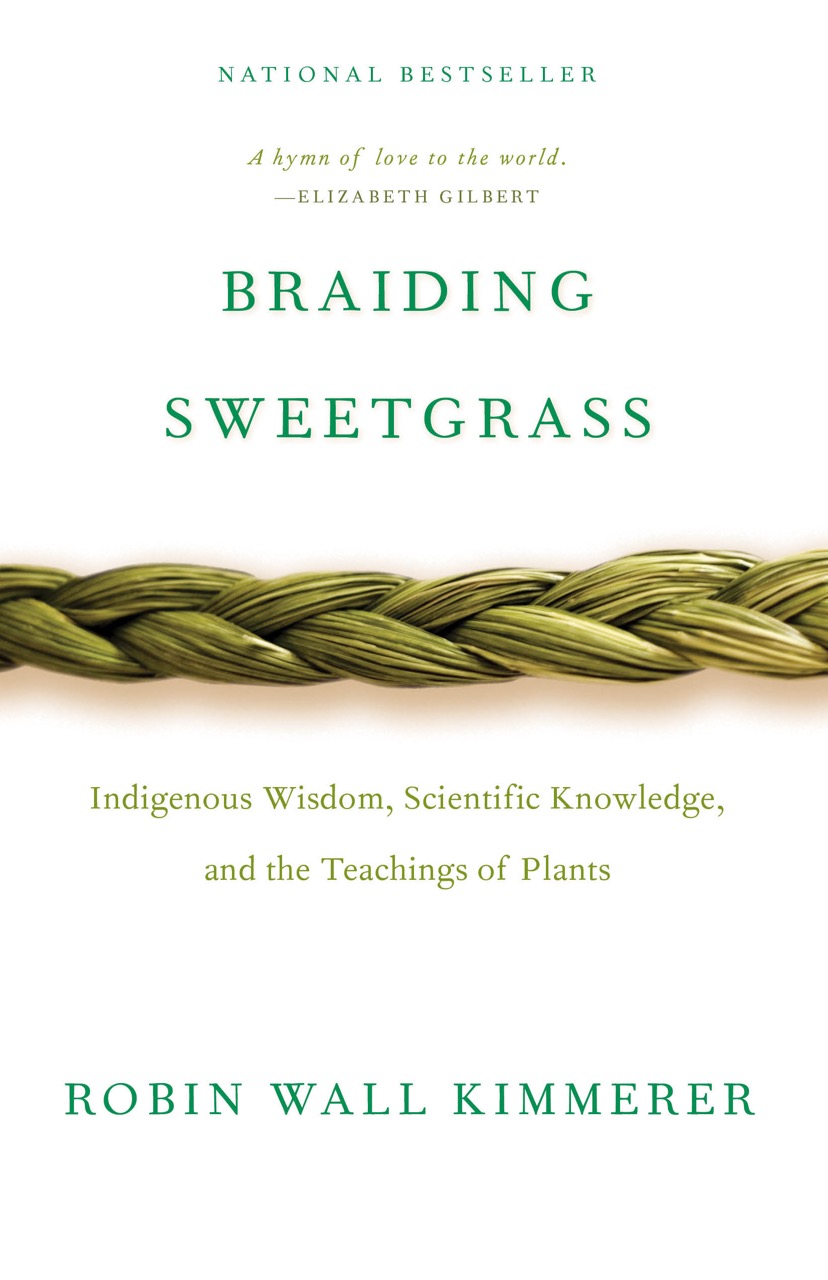
Braiding Sweetgrass: Indigenous Wisdom, Scientific Knowledge and the Teachings of Plants by Robin Wall Kimmerer
Drawing on her life as an Indigenous scientist and as a woman, Kimmerer shows how other living beings—asters and goldenrod, strawberries and squash, salamanders, algae, and sweetgrass—offer us gifts and lessons, even if we've forgotten how to hear their voices. In reflections that range from the creation of Turtle Island to the forces that threaten its flourishing today, she circles toward a central argument: that awakening ecological consciousness requires acknowledging and celebrating our reciprocal relationship with the rest of the living world. Only when we can hear the languages of other beings will we be capable of understanding the generosity of the earth and learn to give our own gifts in return.

The Berry Pickers by Amanda Peters
July 1962. Following in the tradition of Indigenous workers from Nova Scotia, a Mi’kmaq family arrives in Maine to pick blueberries for the summer. Weeks later, four-year-old Ruthie, the family’s youngest child, vanishes. She is last seen by her six-year-old brother, Joe, sitting on a favorite rock at the edge of a berry field. Joe will remain distraught by his sister’s disappearance for years to come.
In Maine, a young girl named Norma grows up as the only child of an affluent family. Her father is emotionally distant, her mother frustratingly overprotective. Norma is often troubled by recurring dreams and visions that seem more like memories than imagination. As she grows older, Norma slowly comes to realize there is something her parents aren’t telling her. Unwilling to abandon her intuition, she will spend decades trying to uncover this family secret.

Earth Keeper: Reflections on the American Land by N. Scott Momaday
One of the most distinguished voices in American letters, N. Scott Momaday has devoted much of his life to celebrating and preserving Native American culture, especially its oral tradition. A member of the Kiowa tribe, Momaday was born in Lawton, Oklahoma and grew up on Navajo, Apache, and Pueblo reservations throughout the Southwest. It is a part of the earth he knows well and loves deeply.
In Earth Keeper, he reflects on his native ground and its influence on his people. “When I think about my life and the lives of my ancestors,” he writes, “I am inevitably led to the conviction that I, and they, belong to the American land. This is a declaration of belonging. And it is an offering to the earth.”
In this wise and wondrous work, Momaday shares stories and memories throughout his life, revealing a profound spiritual connection to the American landscape and reverence for the natural world. He offers both homage and warning, reminding us that the earth is sacred, beautiful, and worthy of our protection.

We Had a Little Real Estate Problem: The Unheralded Story of Native Americans & Comedy by Kliph Nesteroff
In We Had a Little Real Estate Problem, acclaimed comedy historian Kliph Nesteroff focuses on one of comedy’s most significant and little-known stories: how, despite being denied representation in the entertainment industry, Native Americans have influenced and advanced the art form.

Indigenous Peoples' History of the United States: A Graphic Interpretation by Roxanne Dunbar-Ortiz
Roxanne Dunbar-Ortiz’s influential New York Times bestseller exposed the brutality of this nation’s founding and its legacy of settler colonialism and genocide. Through evocative full-color artwork, renowned cartoonist Paul Peart-Smith brings this watershed book to life, centering the perspective of the peoples displaced by Europeans and their descendants to trace Indigenous perseverance across four centuries.

Ceremony by Leslie Marmon Silko
Thirty years since its original publication, Ceremony remains one of the most profound and moving works of Native American literature. Tayo, a World War II veteran of mixed ancestry, returns to the Laguna Pueblo Reservation deeply scarred by war and alienation. Only by immersing himself in the Indian past can he begin to regain the peace that was taken from him. Filled with the somber majesty of Pueblo myth, this novel endures as a ceremony of healing.

Wandering Stars by Tommy Orange
Colorado, 1864. Star, a young survivor of the Sand Creek Massacre, is imprisoned at Fort Marion, where he is forced to learn English and Christianity under Richard Henry Pratt, founder of the Carlisle Indian Industrial School. Generations later, Star’s descendants grapple with the inherited trauma of assimilation and loss. In this powerful novel, Tommy Orange examines generational survival and identity with lyricism and force.

Firekeeper's Daughter by Angeline Boulley
Eighteen-year-old Daunis Fontaine has never quite fit in, both in her hometown and on the nearby Ojibwe reservation. When tragedy strikes, she pauses her college plans to care for her mother—until a shocking murder pulls her into an FBI investigation of a deadly new drug. Drawing on her knowledge of chemistry and Ojibwe traditional medicine, Daunis must navigate loyalty, love, and justice in this gripping coming-of-age thriller.

Beyond the Glittering World edited by Darcie Little Badger, Stacie Shannon Denetosie, and Kinsale Drake
This collection brings together twenty-two emerging and established Indigenous writers whose poems and stories expand the imagination. From a museum heist centuries in the making to lyrical explorations of love and loss to a tale where language itself becomes the force that saves the land, this genre-bending anthology illuminates the power of Indigenous voices.

A Grandmother Begins the Story by Michelle Porter
In her debut novel, award-winning author Michelle Porter weaves an enchanting and original story of healing and connection across five generations of Métis women—and the bison and land that surround them. Through voices that transcend time and form, Porter celebrates family, resilience, and the sacred ties between people and place.