
Hispanic Heritage Month Reading Recommendations
Questions? Contact Tyler Hill, Library Research Assistant | tyler.hill@usu.edu
Celebrate Hispanic Heritage Month with stories that honor history, culture, and creativity. Explore these select titles that showcase the voices, experiences, and contributions of Hispanic and Latinx communities.
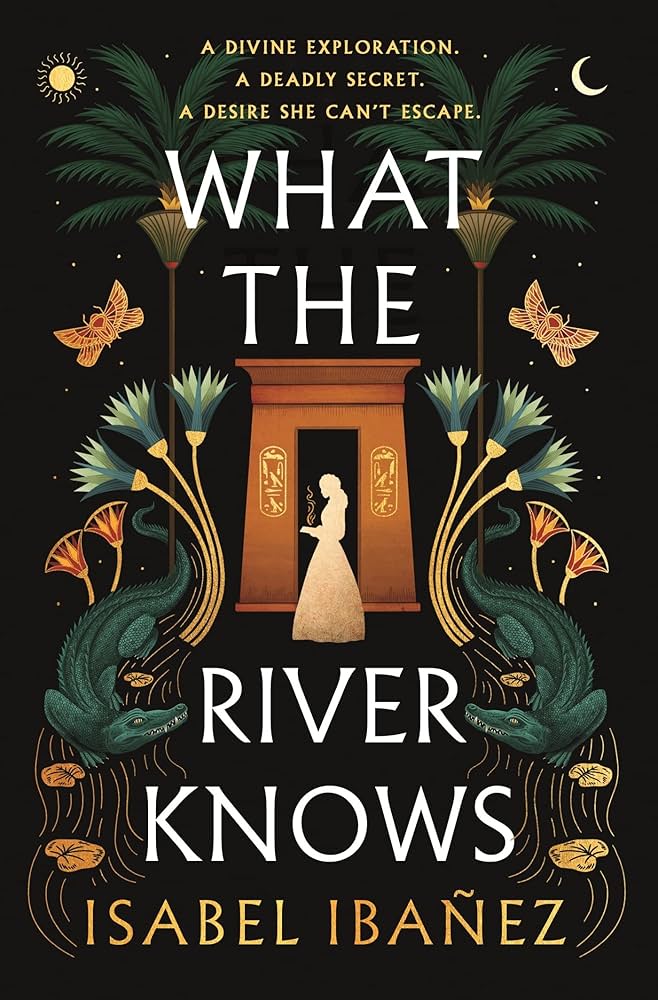
What the River Knows by Isabel Ibañez
For the month of October, the USU community can enjoy unlimited access to What the River Knows through the Libby app. No holds and no wait times—just instant reading for everyone.
Visit this page to learn how to connect your A-number to the Libby app.

The President and the Frog by Carolina De Rebirths
As engrossing as it is innovative, vivid, moving, and full of wit and humor, The President and the Frog explores the resilience of the human spirit and what is possible when danger looms. Ferrying us between a grim jail cell and the president's lush gardens, the tale reaches beyond all borders and invites us to reimagine what it means to lead, to dare, and to dream.

Wild Tongues Can't Be Tamed by Saracen J. Fennell
In Wild Tongues Can't Be Tamed, bestselling and award-winning authors as well as up-and-coming voices interrogate the different myths and stereotypes about the Latinx diaspora. These fifteen original pieces delve into everything from ghost stories and superheroes, to memories in the kitchen and travels around the world, to addiction and grief, to identity and anti-Blackness, to finding love and speaking your truth. Full of both sorrow and joy, Wild Tongues Can't Be Tamed is an essential celebration of this rich and diverse community.

One Hundred Years of Solitude by Gabriel García Márquez
One of the most influential literary works of our time, One Hundred Years of Solitude remains a dazzling and original achievement by the masterful Gabriel García Márquez, winner of the Nobel Prize in Literature.
One Hundred Years of Solitude tells the story of the rise and fall, birth and death of the mythical town of Macondo through the history of the Buendiá family. Inventive, amusing, magnetic, sad and alive with unforgettable men and women—brimming with truth, compassion, and a lyrical magic that strikes the soul—this novel is a masterpiece in the art of fiction.

The House on Mango Street by Sandra Cisneros
The House on Mango Street is one of the most cherished novels of the last fifty years. Readers from all walks of life have fallen for the voice of Esperanza Cordero, growing up in Chicago and inventing for herself who and what she will become. “In English my name means hope,” she says. “In Spanish it means too many letters. It means sadness, it means waiting."
Told in a series of vignettes—sometimes heartbreaking, sometimes joyous—Cisneros's masterpiece is a classic story of childhood and self-discovery and one of the greatest neighborhood novels of all time. Like Sinclair Lewis's Main Street or Toni Morrison's Sula, it makes a world through people and their voices, and it does so in language that is poetic and direct. This gorgeous coming-of-age novel is a celebration of the power of telling one’s story and of being proud of where you're from.

Borderlands / La Frontera: The New Mestiza by Gloria Anzaldúa
Rooted in Gloria Anzaldúa's experience as a Chicana, a lesbian, an activist, and a writer, the essays and poems in this volume profoundly challenged, and continue to challenge, how we think about identity. Borderlands / La Frontera remaps our understanding of what a "border" is, presenting it not as a simple divide between here and there, us and them, but as a psychic, social, and cultural terrain that we inhabit, and that inhabits all of us.

Tripas: Poems by Brandon Som
With Tripas, Brandon Som follows up his award-winning debut with a book of poems built out of a multicultural, multigenerational childhood home, in which he celebrates his Chicana grandmother, who worked nights on the assembly line at Motorola, and his Chinese American father and grandparents, who ran the family corner store. Enacting a cómo se dice poetics, a dialogic poem-making that inventively listens to heritage languages and transcribes family memory, Som participates in a practice of mem(oir), placing each poem's ear toward a confluence of history, labor, and languages, while also enacting a kind of “telephone” between cultures. Invested in the circuitry and circuitous routes of migration and labor, Som’s lyricism weaves together the narratives of his transnational communities, bringing to light what is overshadowed in the reckless transit of global capitalism and imagining a world otherwise―one attuned to the echo in the hecho, the oracle in the órale.

Woman Without Shame by Sandra Cisneros
Woman Without Shame is a moving collection of songs, elegies, and declarations that chronicle her pilgrimage toward rebirth and the recognition of her prerogative as a woman artist. These bluntly honest and often humorous meditations on memory, desire, and the essential nature of love blaze a path toward self-awareness. For Cisneros, Woman Without Shame is the culmination of her search for home—in the Mexico of her ancestors and in her own heart.